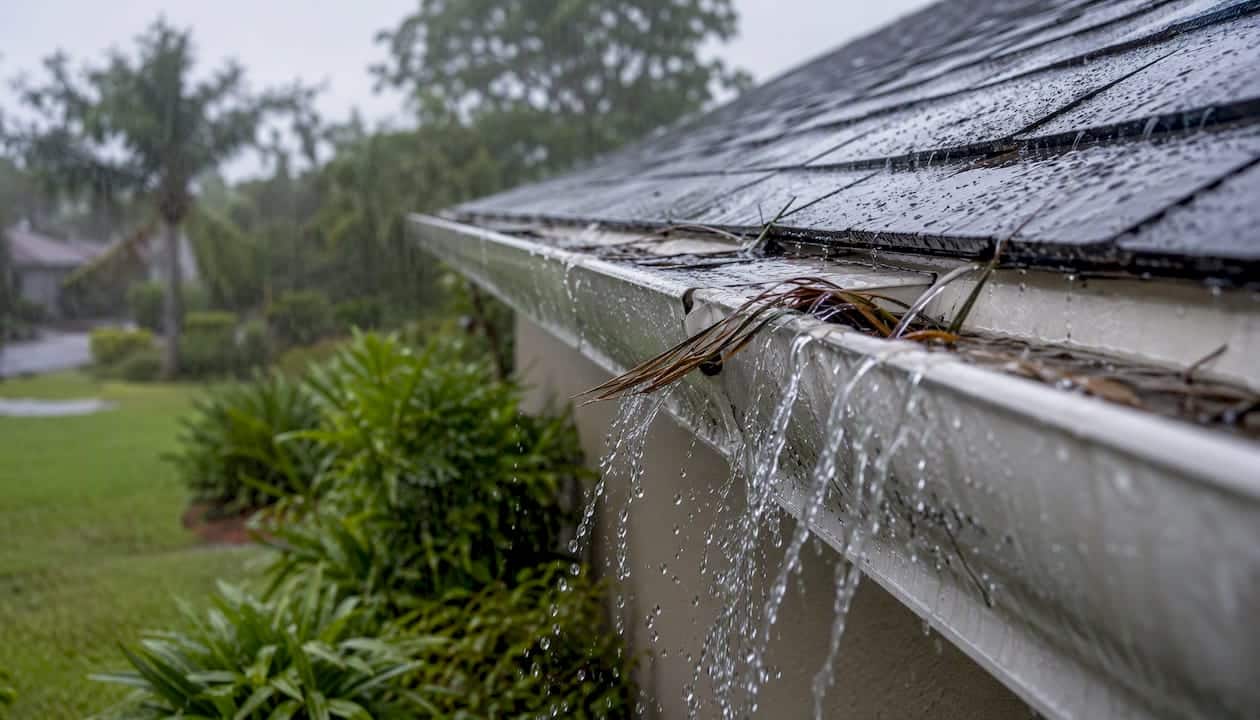
Aluminum Gutters in Central Florida: Why Material Choice Matters in Humid Weather
Central Florida asks a lot from a gutter system. Long wet stretches, sudden downpours, heavy roof runoff, sticky humidity, and storm season all put stress on parts of the house that many people barely notice until something goes wrong. A gutter is supposed to do a simple job, but in places like Ocala, Gainesville, Lady Lake, Wildwood, Fruitland Park, and Newberry, simple jobs get harder fast when water arrives all at once and yard debris never seems to stop falling.
That is why material choice matters more here than it might in a drier climate. When homeowners start comparing options, aluminum gutters Central Florida properties often use tend to come up early for a reason. They are widely used, familiar to local installers, and practical for weather that is wet, hot, and hard on exterior components. The material alone is not the whole story, of course. The profile, the gutter size, the fastening method, the downspout layout, and the maintenance plan all matter too. But if you start with the wrong material, the rest of the design has to work around that mistake.
Humidity changes the conversation
In a mild climate, homeowners can get away with thinking of gutters as trim. In Florida, gutters act more like active drainage equipment. The air stays damp for long stretches. Roofs dry more slowly. Organic debris breaks down in troughs. Fasteners and brackets live outdoors year-round. If a system sits wet, stays clogged, or pulls away from the fascia, you do not just get an ugly line of overflow during the next rain. You get water where it should not be, concentrated at the edge of the house instead of being directed away from it.
The local weather pattern is what makes aluminum such a practical choice. Florida building guidance requires gutters and downspouts to be sized and discharged according to code, and it also requires them to be made of metal or approved plastic and secured with corrosion-resistant fasteners. That last point matters in humid weather. It is not enough for the trough itself to perform well. The whole assembly has to hold up, including the screws, hangers, and connections.
Aluminum fits that reality well because it is a metal option commonly used for residential gutters, and it pairs naturally with the need for corrosion-resistant fastening. In humid regions, that is not a side detail. It is part of what keeps the system attached, aligned, and functional after repeated wet-dry cycles and storm exposure.
What goes wrong when the material and climate do not match
The problems homeowners notice first are usually visible ones. Water sheets over the front edge during a hard rain. Staining appears on fascia or soffit. Mulch gets displaced below the roofline. The bed nearest the corner of the home looks washed out. The downspout spits water too close to the foundation. The gutter line sags. Those symptoms may have several causes, but humid weather amplifies all of them.
Organic buildup is one of the biggest reasons. UF/IFAS guidance for Florida maintenance specifically calls for cleaning gutters and downspouts as needed and removing organic buildup, especially in summer. That recommendation lines up with what people here already see in real life. Pine needles mat together. Oak leaves hold moisture. Acorns and small twigs collect at outlets. When debris sits in a damp trough, water flow slows, weight increases, and the system spends more time wet. In a place where storms can dump a lot of water quickly, even a partially blocked outlet can turn a working gutter into an overflowing one.
Material choice matters because some materials tolerate that cycle better than others, especially when maintenance is not perfect. And maintenance is rarely perfect. Homeowners travel. Trees drop debris after windy afternoons. Storm prep gets rushed. Someone means to clean the gutters next weekend, then the next heavy rain arrives first.
Why aluminum keeps making sense
There is no magic gutter material that removes the need for maintenance, and anyone promising that should be treated cautiously. Even the best system still has to move water, resist weather, and stay clear enough to function. Aluminum works well in Central Florida because it meets the practical demands of the region without making the system overly complicated.
It is also a sensible match for seamless fabrication, which is why seamless gutters Ocala FL homeowners ask about are often aluminum. Fewer joints generally means fewer places for leaks and buildup to start. That is not a guarantee of zero problems, but it is a meaningful design advantage in a climate where water volume and debris load can expose weak points quickly.
Another reason aluminum remains popular is versatility. It can be formed into common residential profiles, including K-style gutters Lady Lake FL homes often use. K-style profiles are familiar, widely available, and visually at home on many houses. The exact profile is less important than making sure it is properly sized and installed for the roof area it serves, but in practice homeowners often choose K-style because it balances appearance and function.
Sizing matters as much as material
A lot of gutter trouble gets blamed on clogs when the real issue is that the system was undersized, poorly sloped, or laid out without enough attention to how water actually exits the roof. When people search for gutter sizes for Florida homes, they usually want a quick rule. The honest answer is that sizing depends on the roof layout, how much area drains to each section, and how the downspouts are arranged. Florida code requires sizing and discharge to follow the applicable building and plumbing provisions, which is exactly how it should be handled.
That means the right contractor should not guess. They should assess the home, look at the roof geometry, account for concentrated runoff zones, and think carefully about where the discharged water goes once it leaves the downspout. Oversimplified recommendations sound convenient, but Florida weather punishes convenient shortcuts.
Sizing also ties directly to storm readiness. Storm ready gutters Florida homeowners need are not just stronger gutters. They are gutters that can move water efficiently during intense rain, stay attached under stress, and discharge runoff where it does not immediately create another problem at grade.
Downspouts are where many systems quietly fail
A gutter can be beautifully installed and still perform poorly if the downspout layout is wrong. This is the part of the system many people underestimate. The trough catches the water, but the downspouts decide whether that water leaves efficiently or backs up.
That is why downspout drainage Newberry FL homeowners ask about deserves more attention than it usually gets. If debris collects at the outlet, if the downspout count is too limited for the roof section, or if the discharge point sends water right back against the home, the gutter system may technically be intact while still doing a weak job.
Florida guidance also emphasizes keeping gutters and storm drains clear because clogged systems during storm preparation can quickly become part of a larger runoff problem. The concern is not only protecting the house. Organic debris that washes out of gutters can move into drains and waterways. UF/IFAS also notes that leaf litter and yard debris should be kept out of gutters and storm drains, and that live oak leaves and acorns can contribute to stormwater nutrient pollution. That is an important local angle many homeowners never hear from salespeople. Cleaning the system is not just a house maintenance task. It is also part of responsible stormwater management.
The debris problem is very Florida
In some regions, gutter maintenance mostly means dealing with broadleaf fall once a year. Central Florida has a different rhythm. Pine needles, oak leaves, twigs, seed litter, and acorns can show up in different combinations over long parts of the year. The debris may not look dramatic from the ground, but small organic material is often the stuff that causes the most stubborn trouble because it slips past crude screens, mats down near outlets, and stays damp.
That makes gutter guards for pine needles Florida homeowners consider a nuanced topic rather than a simple yes-or-no answer. Guards can help in some situations, particularly where rooflines collect a steady stream of fine debris. But no guard is truly maintenance-free, especially in a humid climate with mixed organic debris. Fine material can still accumulate on top of the guard or work its way into trouble spots. Homeowners should think of guards as a way to reduce cleaning frequency or improve flow consistency, not as a permanent substitute for inspection.
Where pine needles and oak leaves are common, it also helps to think beyond the gutter itself. UF/IFAS materials mention using fallen leaves and pine needles on-site as mulch rather than letting them wash away. That is a smart reminder that yard debris management starts at the landscape level. If a property constantly sheds into roof valleys and gutter runs, trimming, cleanup habits, and drainage planning around the home all affect how hard the gutter system has to work.
Seamless versus sectional, and why joints matter here
In humid weather, every joint is a potential maintenance point. That is one reason seamless gutters get so much attention. A seamless run still has seams at corners and connections, so the name can be misleading if taken literally, but reducing the number of field joints helps. Less interruption in the trough generally means fewer spots where leaks or hang-ups develop over time.
For homeowners considering gutter replacement Gainesville FL projects, this often becomes part of the value calculation. A seamless aluminum system may not eliminate future service, but it can simplify the layout and reduce the number of vulnerable points. In a region with frequent wet conditions, simplifying the water path is usually a good instinct.
Sectional systems are not automatically bad. If they are well-made, well-supported, and appropriately maintained, they can perform. But the more connections a system has, the more places there are for sealant fatigue, debris catch, and slight misalignment to create trouble later. Florida weather has a way of exposing those little weak spots.
Repairs are often about more than the gutter itself
Homeowners usually call for gutter repair Wildwood FL service after visible overflow, sagging, or a detached section. Fair enough. Those are real repair issues. But a good repair visit should also ask why the system failed. Was the debris load overwhelming an otherwise adequate system? Were fasteners wrong for the environment? Did a downspout discharge into a bad location? Was the gutter size marginal from day one? Was the slope off enough that standing water stayed in the trough longer than it should?
Those questions matter because replacing a damaged section without addressing the cause often leads to a repeat problem in the next stormy stretch. In humid climates, persistent dampness and recurring blockages tend to expose every unresolved weakness. That is why material choice, profile, fastening, and maintenance cannot be separated cleanly. They work together, or they fail together.
When cleaning is the best upgrade
Not every problem calls for replacement. Sometimes the smartest next step is simply thorough cleaning and evaluation. Gutter cleaning Fruitland Park FL homes need may sound routine, but in this climate it is preventive work with real value. Clearing pine needles, leaves, acorns, and organic muck from the trough and outlets restores flow, reduces standing moisture, and gives you a chance to see whether the system is still properly aligned and secured.
A cleaned gutter also tells a more honest story. Overflow from a packed trough does not prove the material was wrong. It proves the system was obstructed. On the other hand, if a cleaned and properly flowing gutter still overshoots during ordinary heavy rain, that points to design, sizing, or discharge issues that cleaning alone will not fix.
For many homeowners, this is the dividing line between maintenance and capital work. If the system drains well once cleared and remains soundly attached, a replacement can often wait. If not, replacing old components with properly sized aluminum may be the better long-term move.
What to ask when hiring a gutter contractor Florida homeowners can trust
The quality of the installation matters as much as the material. Hiring a gutter contractor Florida homeowners can rely on means finding someone who treats gutters as a drainage system, not just as a metal accessory attached to the roof edge. A contractor should be comfortable talking about code-based sizing, downspout placement, discharge paths, fastening methods, and ongoing maintenance expectations in a humid climate.
A few questions tend to reveal whether the conversation is serious or superficial:
- How are you determining the right gutter and downspout sizing for this roof?
- Where will each downspout discharge, and how will that affect runoff around the home?
- What fasteners and support methods are being used for this installation?
- How should this system be maintained given the trees and debris on this property?
- If gutter guards are added, what maintenance will still be necessary?
Those questions do not require the homeowner to know every technical detail. They simply force a practical discussion. If the answers stay vague, lean heavily on generic claims, or skip over drainage discharge, that is a warning sign.
Material choice is really a maintenance strategy
The longer I work around exterior drainage discussions, the more convinced I become that homeowners should think of material choice as part of a maintenance plan. Aluminum is not better because it is trendy. It is better for many Central Florida homes because it fits the local mix of humidity, rain, and code expectations without asking for unrealistic perfection.
That does not mean every aluminum system is good. A poorly sized, poorly sloped, or poorly discharged aluminum gutter is still a poor system. But when the material is paired with correct design and realistic upkeep, it matches the climate well. It also fits the way people actually live. Most homeowners want a system that performs reliably through wet seasons, tolerates the occasional lapse in cleaning better than more fragile setups, and can be repaired or replaced without turning into a specialty project.
The best system is the one that matches the house and the site
There is no universal answer that works for every roofline from Gainesville to Lady Lake. A low tree lot presents different challenges than a heavily wooded one. A house with long roof runs and concentrated valleys has different drainage demands than a compact single-story home with simple geometry. A property that already struggles with runoff near walkways or planting beds needs a more thoughtful discharge strategy than one with easy grading away from the structure.
That is why aluminum keeps coming up as a strong default in this region. It is not because the climate is simple. It is because the climate is demanding, and aluminum fits into code-compliant, corrosion-conscious, practical residential drainage design better than gutter contractor in Marion County many alternatives.
If you are weighing gutter replacement Gainesville FL work, planning seamless gutters Ocala FL installation, comparing K-style gutters Lady Lake FL options, or trying to solve stubborn downspout drainage Newberry FL issues, the smartest approach is to start with the weather you actually live in. Humidity, summer buildup, storm prep, and debris load are not side notes in Florida. They are the job description.
Choose a material that respects that. Then size it correctly, fasten it correctly, keep it clear, and make sure the water has somewhere sensible to go once it leaves the roof. That is what turns a gutter from a trim piece into a system that earns its keep year after year.