Hawthorne Area HOA Questions About Gutter Colors, Finishes, and Exterior Changes
If you live in an HOA community around Hawthorne, you already know that small exterior details can turn into big questions. Gutters are a perfect example. Homeowners often think of them as purely functional, right up until an architectural review committee asks about color, finish, profile, or where the downspouts will discharge. Then the project stops feeling simple.
That tension is understandable. In Florida, gutters do real work. Summer thunderstorms dump water fast. Tropical weather can push runoff where you do not want it. High humidity and regular leaf litter mean routine upkeep matters. At the same time, HOAs are usually trying to keep streetscapes consistent. A gutter run that blends nicely on one house can look oddly prominent on another, especially if the fascia color, roof type, and trim package all change the visual balance.
Most of the questions I hear from homeowners are not really about gutters alone. They are about how to make a sensible upgrade without triggering a back and forth with the HOA, or without creating a drainage problem that shows up later around the foundation, pool deck, or planting beds. That is where it helps to think about appearance and performance together instead of treating them as separate decisions.
Why color and finish turn into HOA issues so quickly
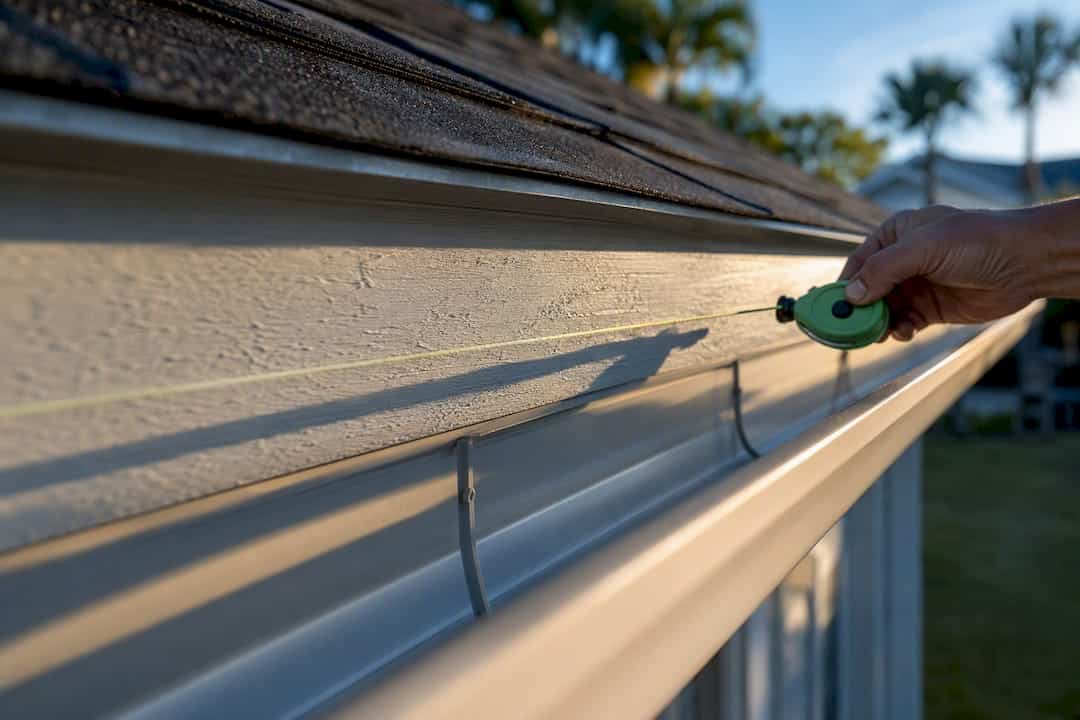
A gutter sits right at the roofline, which means it frames the house whether anyone notices it or not. In neighborhoods with close lot lines or repeated elevations, the eye picks up those horizontal lines immediately. A color that is only slightly off from the fascia can read as a stripe across the front of the home. A glossy finish can catch sunlight harder than expected. A contrasting downspout can look even more obvious than the gutter itself.
That is why gutter colors for Florida homes get more attention than some homeowners expect. It is not always because the HOA wants to be difficult. In many communities, the concern is uniformity. If trim is a warm white, bronze, beige, or another specific exterior tone, the committee may want the gutter system to match the trim rather than the roof. On other homes, especially where the fascia color is darker, matching the fascia can make the whole system almost disappear.
The practical side matters too. Dirt, pollen, mildew staining, and splash marks can show differently depending on the finish. In a humid climate, a bright white downspout on the shady side of the house may look crisp on day one and more tired a year later if it is installed near mulch beds or heavy vegetation. A darker finish can hide some staining, but it can also highlight chalking or surface wear differently over time. There is no universal best color. The right answer usually depends on where the gutter sits visually and how exposed it will be to water, debris, and reflected light.
What an HOA is usually trying to approve
Florida associations generally do have authority over exterior appearance standards. That broad authority is why color, style, and visible components often need review before installation. The key point for homeowners is that the review is usually about how the system will look from the street and whether it fits the governing aesthetic rules, not whether gutters themselves are useful.
A smooth approval process often depends on how clearly you show the committee what you want to install. The more specific your submittal, the fewer follow-up questions you tend to get.
Here are the details that usually make a difference:
- The proposed color and finish, with the manufacturer color name if available.
- A sketch or photo showing where gutters and downspouts will be placed.
- Notes about discharge, especially where downspouts will send water.
- The roof type and trim colors the new system will coordinate with.
- Whether the work includes replacement only or adds new visible components.
That last point matters more than people think. Replacing an old system in the same color and layout is often easier to explain than adding a new downspout at the front corner of the home, even if the drainage improvement is worthwhile. If you need a visible change for water management, say that clearly. It helps the committee understand that the choice is functional, not random.
Matching color is only half the job
A good-looking gutter can still create headaches if the drainage plan is weak. In Florida, roof runoff needs to go somewhere sensible. Guidance for this region consistently emphasizes directing downspouts away from the house and toward areas that can absorb water, such as lawn or planted areas. That approach can help reduce runoff, protect the foundation area, and limit erosion or soggy spots near the structure.
This matters in the Hawthorne area because the weather can shift fast. A gentle rain is one thing. A summer storm with intense roof runoff is another. A neat new gutter system that dumps water beside the foundation or across a walkway is not an upgrade for long. It just moves the problem.
That is one of the more common misunderstandings during HOA review. A homeowner gets focused on the color sample and forgets that the discharge path is what will affect daily life after the install. If your committee asks where the water will go, that is not a trivial question. It is the practical heart of the project.
Downspouts, lawns, beds, and keeping runoff on site
Florida-friendly landscape guidance strongly supports keeping roof runoff on site when possible by directing it into areas that can absorb it, such as turf, planting beds, rain gardens, rain barrels, cisterns, or other pervious areas. The logic is straightforward. When water can soak into the landscape instead of rushing off hard surfaces, you reduce erosion and lessen the chance of pooling in the wrong place.
For homeowners, this often translates into two simple judgments. First, do not send roof water toward the foundation. Second, do not send it where it creates a mess. A mulch bed that constantly washes out is telling you something. So is a low lawn corner that stays soupy after every storm. If you have ever seen ants, damp mulch, or soil splash collecting near the base of the wall after heavy rain, you have seen why discharge location deserves as much attention as gutter color.
This is also where some pool homes need extra thought. Gutter drainage for pool cages and adjacent outdoor living areas can get tricky, because runoff that spills onto deck surfaces or into nearby planting pockets can erode soil, create dirty overflow patterns, and make the space less pleasant to use. Around screened enclosures and pool decks, the neatest-looking downspout route is not always the one that manages water best. Homeowners sometimes need to balance visibility with drainage performance, especially if a concealed-looking discharge point empties into an area that already struggles during heavy rain.
A note on pool-adjacent homes
Pool-side drainage problems often start small. A little oversplash near a corner post. A damp stripe where a deck meets planting beds. Mulch migrating after storms. Then over one season, the problem becomes obvious. Water repeatedly takes the easiest path, and the pool area ends up with grit, erosion, or standing water where nobody wants it.
That is why HOA conversations around these homes should not stop at “Will the downspout be visible?” If the property has a cage, deck, or outdoor room, ask how the runoff will behave during a real Florida thunderstorm. A discreet downspout extension into a planted area can be more attractive in the long run than a cleaner-looking setup that leaves washouts near the screen enclosure.

Metal roofs change the visual equation
Homeowners asking about gutters for metal roofs Florida often run into a different set of appearance concerns. Metal roofing has strong lines and a cleaner, more reflective look than many other roof finishes. That means the gutter can look either well integrated or oddly tacked on, depending on color choice and placement.
With a metal roof, matching the gutter to the fascia usually creates the calmest look. Matching the roof itself can work on some homes, but if the roof is more visually dominant than the trim, the gutter line may still stand out. HOAs may look closely at this because the roof edge is so crisp. Small mismatches can show more than they would on a softer-looking roofline.
The drainage side still matters just as much. Fast-moving runoff and frequent storms mean the layout has to do its job, not just look coordinated. If a home has a metal roof and a pool deck or tight side yard, it is worth showing the HOA where water will discharge, not simply what the gutter color sample looks like.
Seamless versus sectional, and why homeowners ask about finish first
People often lead with product names. They ask about seamless gutters Williston FL or a nearby crew they were referred to, and the first thing they mention is usually appearance. That makes sense because seamless systems tend to look cleaner from the ground. Fewer joints can mean a simpler visual line along the eaves, which HOAs generally appreciate.
But appearance should not be separated from maintenance expectations. Florida debris, leaf litter, and routine wear still apply. Even a tidy installation needs cleaning and occasional repair. That is especially true where trees overhang roof edges or where valleys shed concentrated runoff into a short section of gutter.
For a homeowner trying to get approval, “seamless” is not a magic word. It can be part of a good application, but the color match, discharge plan, and visibility of downspouts still carry most of the review weight.
Gutter myths that cause preventable HOA disputes
A lot of friction comes from assumptions that sound reasonable until you look at how houses behave in wet weather.
One of the biggest gutter myths Florida homeowners repeat is that if the front elevation looks clean, the job is done. In practice, the least visible layout is not always the best one. Another myth is that all white gutters blend in. Sometimes they do. Sometimes they become the brightest line on the house. A third is that downspouts can empty almost anywhere as long as water moves away from the roof edge. That is not enough. Water should move away from the home and into an area that can absorb it, not just shift the puddle a few feet.
There is also a common belief that gutter guards eliminate maintenance. They can reduce some debris issues, but they do not make Florida weather disappear. Gutters and downspouts still need attention because leaf litter and other debris can contribute to drainage problems. If you are asking https://marioltnn107.capitaljays.com/posts/seamless-gutters-in-ocala-fl-how-material-and-finish-choices-affect-maintenance about gutter guards Mount Dora FL because a neighbor swears you will never have to think about your gutters again, take that claim lightly. Less maintenance and no maintenance are not the same thing.
Repair versus replacement in an HOA neighborhood
Sometimes the right project is not a full replacement. Homeowners searching for gutter repair Hawthorne FL are often dealing with a section that overflows, a downspout that was poorly placed, or visible wear that makes the whole system look worse than it performs. In an HOA setting, repair can be attractive because it may preserve the existing appearance while fixing a functional issue.
That said, patchwork has limits. If the old color is faded and the repaired section is noticeably different, the result can look worse than a full replacement. If the drainage problem comes from layout rather than damage, repair alone may not solve it. And if a downspout really needs to move to protect the foundation or stop washout, the homeowner may still need approval for a visible change.
This is where good judgment beats rules of thumb. Ask whether the problem is cosmetic, functional, or both. If it is both, a more comprehensive project may be easier to justify than a string of small fixes.
Cost questions deserve honest answers
People naturally want a number, but gutter installation cost factors Florida are not something you can handle responsibly with one blanket price. The final cost usually depends on the size and shape of the roofline, how many downspouts are needed, whether you are replacing or adding gutters, access conditions, color and finish choices, and whether the discharge plan needs extra work to send water to a suitable area.
That is another reason HOA review and contractor planning should happen together, not one after the other. A homeowner might choose a different color, reroute a downspout, or shift the scope from repair to replacement after the committee comments. Those changes can affect the proposal. It saves frustration when the visual requirements and the drainage requirements are considered at the same time.
Cleaning, guards, and the question every homeowner eventually asks
At some point, every gutter conversation becomes a maintenance conversation. The nicest-looking installation still has to survive humidity, storms, and debris. In this part of Florida, routine upkeep is part of ownership, not a sign that something was installed badly.
Homeowners often frame the issue as DIY gutter cleaning or hire a pro. The honest answer depends on the house, the height, the amount of debris, and your comfort level. The key point is simpler than the debate. Gutters and downspouts need maintenance because debris buildup can interfere with drainage. If maintenance gets skipped, overflow and discharge problems follow, and those problems often show up first in the landscape.
That is why gutter cleaning Dunnellon FL or any nearby service term shows up so often in search patterns. People discover the issue after seeing overflowing corners, washed-out beds, or damp areas near the home. Cleaning is not glamorous, but it is one of the most practical parts of protecting both curb appeal and drainage performance.
A sensible year-round approach
If you want one habit that prevents most gutter-related headaches, it is regular observation. You do not need to stare at the roofline every week. You do need to notice how water behaves during and after storms.
A practical year-round gutter checklist Florida homeowners can follow looks like this:
- Check for overflow or dripping at corners during heavy rain.
- Make sure downspouts discharge away from the house into areas that can absorb water.
- Look for mulch washout, erosion, or soggy soil near discharge points.
- Remove debris or schedule cleaning when flow slows or gutters back up.
- Recheck pool decks, cage edges, and walkways after major storms.
That short routine catches a lot. It also gives you better information if you do need to go back to the HOA or talk with a contractor. “The back left corner overflows and washes mulch into the pool screen planting bed” is far more useful than “the gutter does not seem right.”
How to make your HOA request easier to approve
When I have seen these projects go smoothly, the homeowner usually does three things well. First, they pick a color that clearly coordinates with the house, not just a color they happen to like. Second, they explain the drainage plan in plain language. Third, they show enough detail that the committee does not have to guess.
Friendly, specific communication goes a long way. If the proposed gutter matches the trim, if the downspouts direct water into lawn or planted areas rather than near the foundation, and if the layout respects outdoor spaces like pool areas, you are already speaking to the concerns that matter most. That is true whether you are discussing a repair in Hawthorne, comparing seamless gutters Williston FL options, or considering gutter guards after too many cleanings.
The best gutter projects in HOA communities rarely win because they are flashy. They win because they look appropriate and behave properly in bad weather. Around Hawthorne, that combination matters more than any sample chip or brochure photo ever will.