How a Typical Gutter Project Moves Forward for Homes in the High Springs Area
If you live near High Springs, you already know that water management is not some small home maintenance detail. A hard summer downpour can turn a quiet afternoon into a fast runoff event in minutes. In this part of Florida, warm-season thunderstorms, heavy humidity, and rainy stretches are part of life. That is exactly why a gutter project tends to matter more here than it might in a drier climate.
Homeowners often picture gutters as a quick add-on. In practice, a good project usually moves through a clear sequence, from the first look at the roofline to the final check during rainfall. Whether the job involves new seamless gutters Gainesville FL homeowners ask for, a targeted gutter repair Gainesville FL property owners need after wear shows up, or gutter guard installation Central Florida residents want to cut back on maintenance, the process works best when each stage gets proper attention.
High Springs sits in a part of the state where rain volume and tree debris often work together. One storm dumps water fast, then live oak leaves, pine needles, acorns, and small twigs collect where they should not. If the system is undersized, sloped poorly, or already clogged, trouble starts showing up around fascia boards, flower beds, walkways, and foundation edges. A well-run project is really about controlling all of that before it becomes a bigger repair.
It usually starts with a problem, not a product
Most people do not wake up wanting new gutters. They call because they saw water overshooting the edge, staining the side of the house, or carving channels in the soil below the eaves. Sometimes the issue is obvious after a storm. Sometimes it builds slowly.
A homeowner might notice that one corner always seems wetter than the rest of the yard, or that mulch keeps washing away in the same place. In other cases, they are tired of arranging frequent gutter cleaning and repair Ocala FL style maintenance routines for another property and want something more manageable at their High Springs home. The trigger varies, but the first step is nearly always the same: figure out whether the current system needs a repair, a partial upgrade, or a full replacement.
That distinction matters. A loose section, a leak at a joint, or a downspout issue may point to repair. Sagging runs, persistent overflow, repeated clogging, or an older setup that simply does not handle local rainfall well may push the project toward replacement. The right answer depends on condition, not guesswork.
The first site visit is about observation
A typical gutter project begins with someone walking the home carefully and looking at how water is meant to move. That sounds simple, but it is where many of the important decisions happen.
The roofline is only one piece of the puzzle. The person evaluating the project also needs to consider the surrounding trees, the way rainwater leaves the roof, and where it lands once it exits the gutter. In High Springs and across North Florida, debris load can be a real factor. Live oak leaves and acorns are notorious for collecting in ways that surprise homeowners. Pine needles are another common issue because they can mat together and create stubborn clogs.
At this stage, a good assessment is not just about the gutters themselves. It is also about what the house asks those gutters to do. A home under heavy tree cover may need a different maintenance plan than an open-lot home. A roofline with several turns and valleys may require more careful layout than a simple straight-run roof. Houses with spots that routinely dump water during summer storms often reveal where extra care is needed in design.
This is also when repair versus replacement becomes clearer. If the existing system has a few isolated trouble spots, a repair approach may make sense. If multiple sections have issues, if water control is poor throughout, or if repeated cleaning has become the norm, replacement starts looking more practical.
Why seamless systems come up so often
In many Florida conversations, seamless gutter installation Leesburg FL homeowners ask about and seamless gutters Gainesville FL residents request come up for one practical reason: fewer joints generally mean fewer places where debris and leaks can become recurring headaches.
That does not mean every older sectional system is automatically bad. Plenty of homes function acceptably for years. But when a homeowner is already investing in replacement, seamless options make sense to discuss because they are built to reduce some of the weak points that show up over time. In a humid, rain-prone environment, reducing opportunities for leaks and buildup is a sensible goal.
Seamless does not eliminate maintenance. That part is worth saying plainly. Florida rain still carries debris into troughs, and nearby trees still drop material onto the roof. But a cleaner, more continuous run can make the whole system easier to manage. For homeowners planning long-term, that can be a deciding factor.
The estimate phase should answer practical questions
Once the inspection is done, the project moves into planning and pricing. This part should feel straightforward, not mysterious. A homeowner does not need a sales speech. They need to know what is being proposed and why.
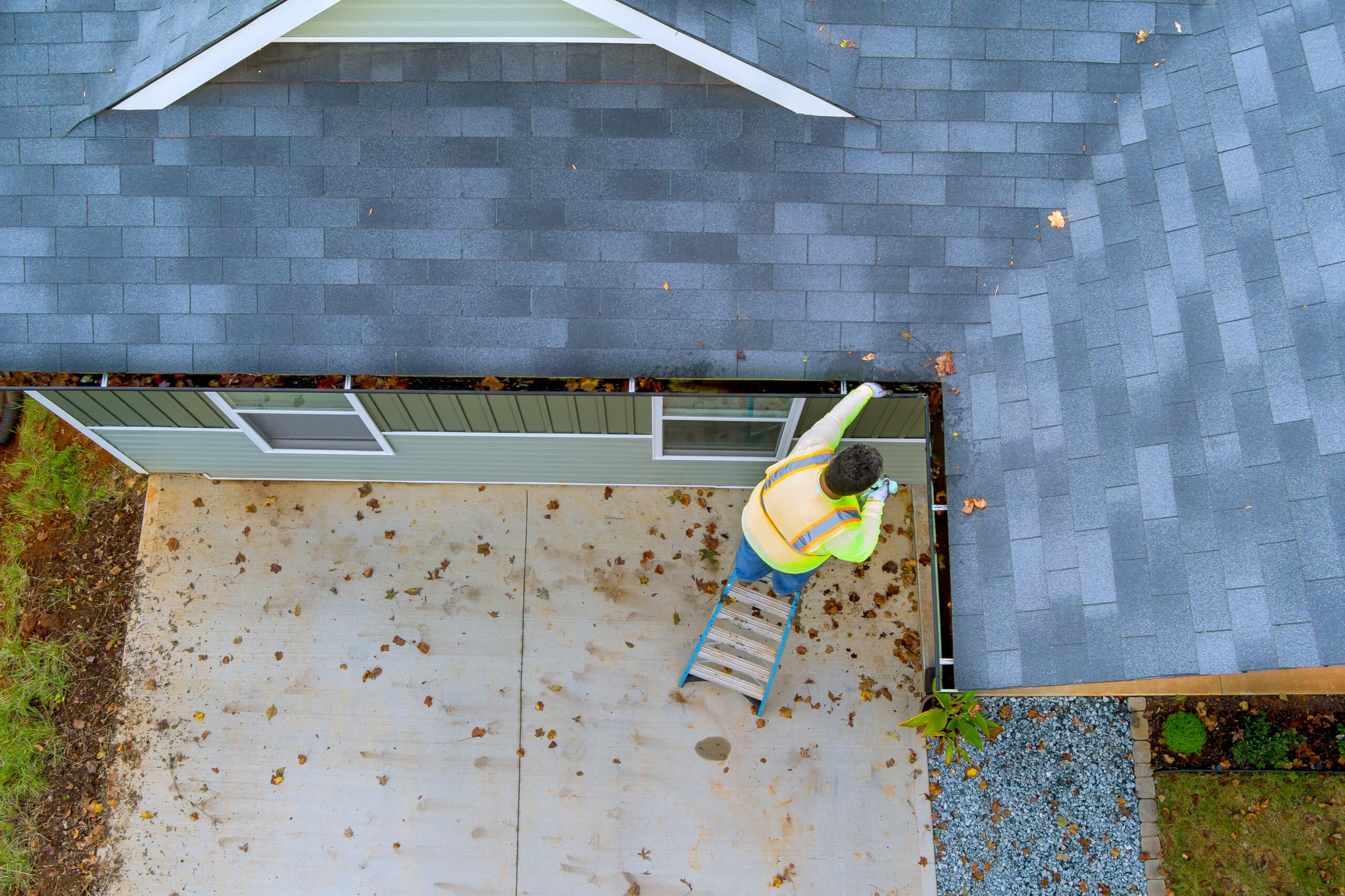
A useful estimate usually clarifies a few key points:
- whether the home needs repair, full replacement, or added protection such as guards
- which areas have the biggest drainage or debris problems
- whether seamless installation is recommended
- how downspout placement affects runoff around the house
- what kind of follow-up maintenance the system will still need
Those details help the homeowner compare options realistically. For example, some people begin the conversation focused on cost alone, then decide that adding guards to the most debris-heavy sections is worth it because they are tired of calling for gutter cleaning Leesburg FL style service every season. Others may learn that their current gutters are serviceable and that selective gutter repair Gainesville FL work is enough for now.
A good plan does not oversell. It matches the house.
Scheduling around Florida weather is part of the job
Anyone who has worked outdoors in this region knows that the weather often has its own opinion about the schedule. Summer storms can build quickly, and heavy rainfall is not rare. Tropical moisture can turn an ordinary week into a wet one. That means timing matters.
For the homeowner, this usually shows up as a flexible installation window rather than a rigid promise built around perfect weather. Dry conditions are better for safe removal, secure fastening, and clean workflow. Rain does not always stop a project entirely, but stormy conditions can delay parts of it.
This is normal in gutter installation North Florida projects. The weather pattern is one reason experienced contractors try to think ahead. If a home already has active overflow or loose sections before the rainy part of the week, scheduling sooner rather than later can prevent more mess and water concentration around the go to the site home.
Removal day is often more revealing than expected
When old gutters come down, hidden issues sometimes become visible for the first time. That does not mean every house has damage behind the system. Many do not. But this is often the moment when years of trapped debris or repeated overflow tell their story.
A fascia edge may show wear where water has run back instead of out. Packed debris may explain why one section overflowed every time. In tree-heavy settings, old organic buildup can be surprisingly dense. Oak litter, small limbs, pine needles, and grit can compact in a way that blocks proper flow and keeps moisture where it should not linger.
This is one reason regular gutter maintenance Florida homeowners put off can become more expensive later. Cleaning is not glamorous, but debris control matters. Plant material left in drainage paths does more than clog the system. It also contributes to messy runoff and can move unwanted organic matter into places it does not belong.
Installation is about pitch and water movement, not just attachment
To a homeowner watching from the yard, installation can look like a simple exercise in fastening metal along the roof edge. The real skill lies in making sure the system actually carries water the way it should.
Pitch has to be subtle but effective. Downspout placement needs to suit the house and the way runoff leaves the roof. The whole run has to support movement during heavy rain without encouraging standing water or obvious overflow at one end. This is where experience matters more than marketing language.
Homes in this region do not just deal with occasional showers. They deal with repeated warm-season storms and periods of intense rain. So the target is not merely to handle a light drizzle. It is to move water reliably during the weather that usually exposes weak design.
If the project involves new gutters The Villages FL homeowners might recognize in nearby communities, the same principle applies there too. Florida homes across this broader region share many of the same rainfall realities, even if the tree cover and lot layout differ from place to place.
Gutter guards enter the conversation for a reason
A lot of homeowners ask about guards after years of cleaning out leaf buildup. In areas with oaks and pines, that question makes perfect sense. Gutter guards Gainesville FL homeowners look into are often less about convenience alone and more about reducing the frequency of packed debris during the wet season.
Still, guards are not magic. That is one of the most important expectations to set early. They can reduce the amount of debris entering the gutter, but they do not remove the need for inspection. Windblown material, shingle grit, and stubborn organic matter can still create problems depending on the style of guard and the surrounding tree canopy.
Several types exist in the market, including screen, mesh, micro-mesh, foam, brush, and reverse-curve designs. The best fit depends on the debris pattern at the property, not just what sounds good in an ad. Pine needles, for example, do not behave exactly like broad leaves. A home under heavy oak cover may face a different challenge than one surrounded by other vegetation.
That is why gutter guard installation Central Florida projects and similar jobs in North Florida work best when the choice is based on local debris conditions. The goal is practical reduction in clogging, not the false promise of zero maintenance.
Some homes need repairs, not replacement
Not every project becomes a full new system. There are many cases where repair is the smarter path. A loose fastener, a separated section, a leak at a connection, or a downspout issue may be correctable without replacing everything.
Here is where judgment matters:
- If the problem is isolated, repair often makes sense.
- If overflow appears in several areas, the layout may be the deeper issue.
- If debris clogs the system repeatedly, cleaning alone may not solve it.
- If the gutters are aging and show multiple weak points, replacement may be more cost-effective.
- If guards are being added, the underlying gutters should be functioning properly first.
That last point gets missed sometimes. Installing guards over a system that already drains poorly does not solve the underlying problem. It only hides it for a while.
The final walkthrough should be simple and useful
Once installation or repair is complete, the project should not end with the crew driving away and the homeowner guessing what changed. A useful wrap-up explains what was done, where water is expected to move, and what the homeowner should watch for after the next few storms.
This does not need to be technical. It should be practical. Which downspouts handle the heaviest runoff? Which areas of the house are most prone to debris because of nearby trees? If guards were installed, how often should the system still be checked? If this was a repair job, what signs would suggest it is time to consider fuller replacement later?
The best time for a homeowner to learn their gutter system is right after the work is done, when the layout is fresh in everyone’s mind.
What happens after the first heavy rain
There is a reason seasoned contractors pay attention to the first serious storm after a project. Rain tells the truth quickly.
A homeowner may see cleaner runoff patterns, less splashback near planting beds, and fewer spots where water pours over the front edge. They may also notice that one side of the house still collects more debris simply because that is where the trees are. That does not mean the project failed. It means the house has a natural high-maintenance zone.
This is also the stage when ongoing gutter maintenance Florida homes need becomes easier to understand. Even a well-installed seamless system with guards may still need seasonal checks, especially after periods of heavy rain, wind, or debris drop. In humid, rain-prone parts of the state, that kind of attention is preventive rather than excessive.
The High Springs factor, trees and storms together
High Springs sits in a part of Florida where weather and vegetation both shape gutter performance. You can have a well-designed system and still face cleanup pressure if the house is surrounded by mature trees. You can have relatively low debris and still run into trouble if intense summer rain overwhelms a neglected section.
That combination is why local experience matters. A gutter contractor Central Florida homeowners trust might handle many of the same guard and cleaning concerns seen farther north, but homes in and around High Springs often bring their own mix of heavy rain exposure and tree litter. The work needs to reflect both.
I have seen homeowners focus almost entirely on product style when the bigger issue was runoff concentration at one corner of the house. I have also seen people assume they needed full replacement when the real culprit was compacted debris and one failed connection. The project moves forward better when diagnosis comes before decisions.
What homeowners can do to help the project go smoothly
A gutter project is easier when the homeowner shares a little context up front. If one side always overflows first, say so. If a previous cleaning revealed acorns packed into a downspout, mention it. If the backyard corner gets soggy after every major storm, that is useful information.
Those details help connect the visible symptoms with the likely drainage pattern. They can also shape whether the solution leans toward replacement, repair, guard installation, or a combination.
It also helps to keep expectations realistic. New gutters do a better job moving roof runoff, but they cannot change the entire grading pattern of a property by themselves. Guards reduce debris entry, but they do not create a maintenance-free exterior. The more clearly those trade-offs are understood, the happier the homeowner usually is with the result.
A good project feels calmer after it is finished
That may sound like an odd way to describe gutters, but it is true. When a project is handled well, the home feels easier to own during the next storm. You are not watching sheets of water miss the gutter and hammer the soil below. You are not wondering if that clogged section is about to spill over again. You are not planning the next emergency cleanup after every spell of rough weather.
Whether the work involves seamless gutter installation Leesburg FL style replacement priorities, seamless gutters Gainesville FL homeowners prefer for cleaner performance, or a focused plan for gutter cleaning and repair Ocala FL property owners also deal with in similar conditions, the basic idea stays the same. A typical project moves from observation to diagnosis, from planning to installation, and from installation to practical maintenance.
For homes in the High Springs area, that process matters because the weather is not gentle for long. Rain comes hard, humidity hangs around, and tree debris rarely takes a season off. A gutter system that fits the house and the conditions can make a real difference, not only in how the exterior looks, but in how the property handles Florida’s regular bursts of water.